January 30th, 2026
CAOS, not Chaos: Coding Agents as Operating Systems
Most coding agents are presented as a chat UI glued to an LLM and integrated into an IDE or CLI. This can work really well for developers who provide the development environment along with constant babysitting to build functional software.
Charlie, however, is built around a different premise: We believe that a great coding agent isn't a simple chatbot—it's an operating system for the model.
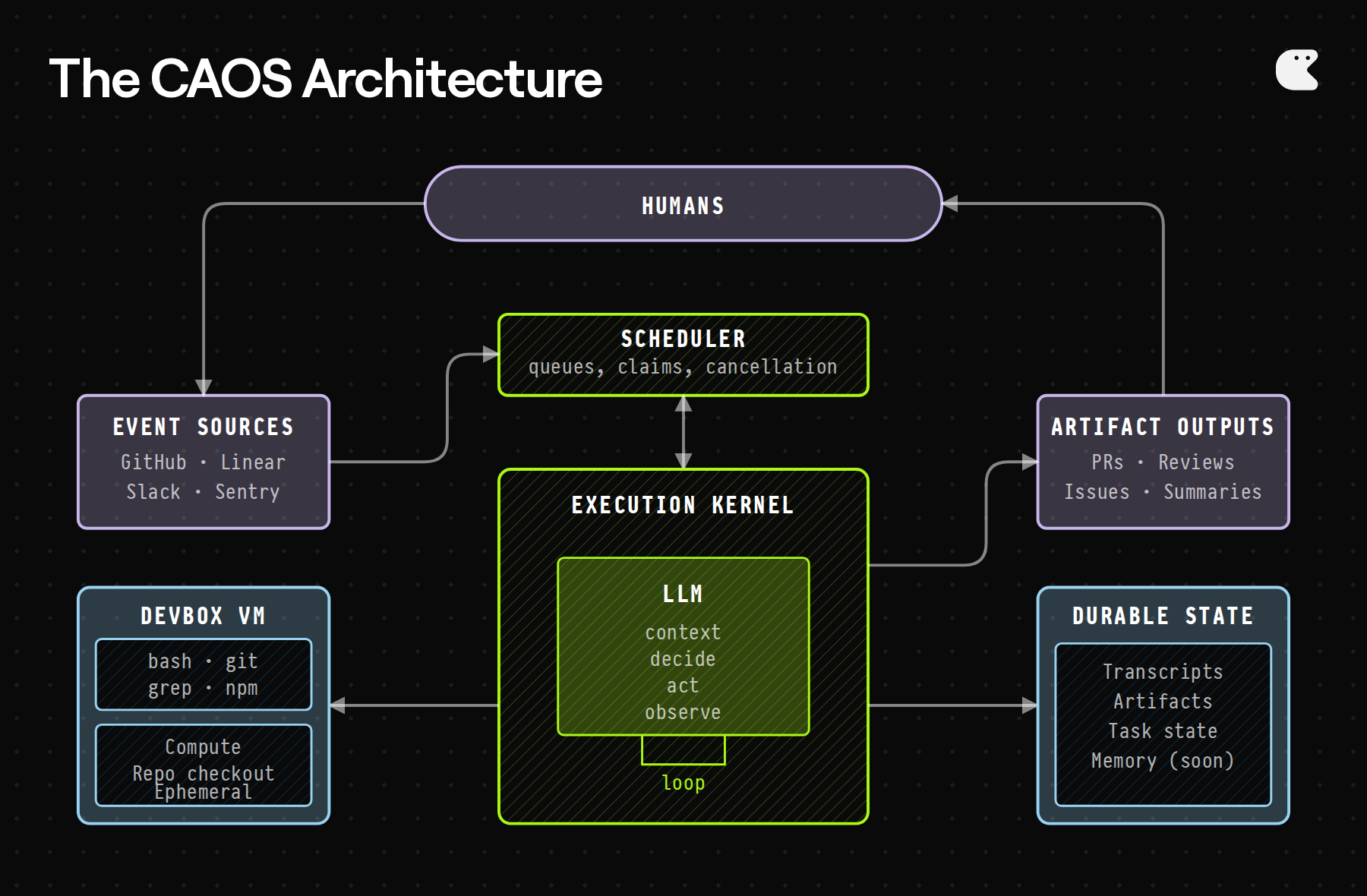
The Operating System agents need
Charlie's "OS layer" gives a model the primitives required to complete end-to-end engineering work:
- Event-driven runtime: runs start from real workflow events in GitHub, Linear, Slack, and Sentry
- Scheduler + interrupts: durable Tasks, single-winner claiming, cancellation, and follow-ups (mailbox)
- Durable execution kernel: a turn-based loop (context → decide → tool calls → observe) that persists state/transcripts
- Real compute: an ephemeral devbox VM with the repository checked out as needed
- Bash + composable CLI tools: the primary interface to code and systems
- Deep integrations: GitHub, Linear, Slack, Sentry, plus web/HTTP
- Guardrails + visibility: least privilege, scoped tool access, and outputs posted back to the surface where the request happened
- Durable artifacts + memory: transcripts/artifacts are durable today; structured cross-run memory is an explicit, opt-in primitive as it matures
When agents run in an operating system, they can diagnose → plan → implement → verify → publish reviewable artifacts all within the systems where your team already works.
The Operating System Advantage
We've got two hot takes on why the OS is essential for great agents:
CLI expressiveness beats bespoke "LLM tools." CLI tools are composable (|, &&, xargs), self-documenting (--help), and match
how engineers actually work. One-off JSON tools tend to be isolated and require tool
designers to predict every use case up front.
Open-loop orchestration beats rigid workflows. Real engineering has surprises: flaky tests, missing context, failing builds, CI-only failures, new constraints. The "OS loop" lets the agent decide the next step based on what it observes, instead of forcing every task into a fixed graph.
IDE assistants vs team-facing execution
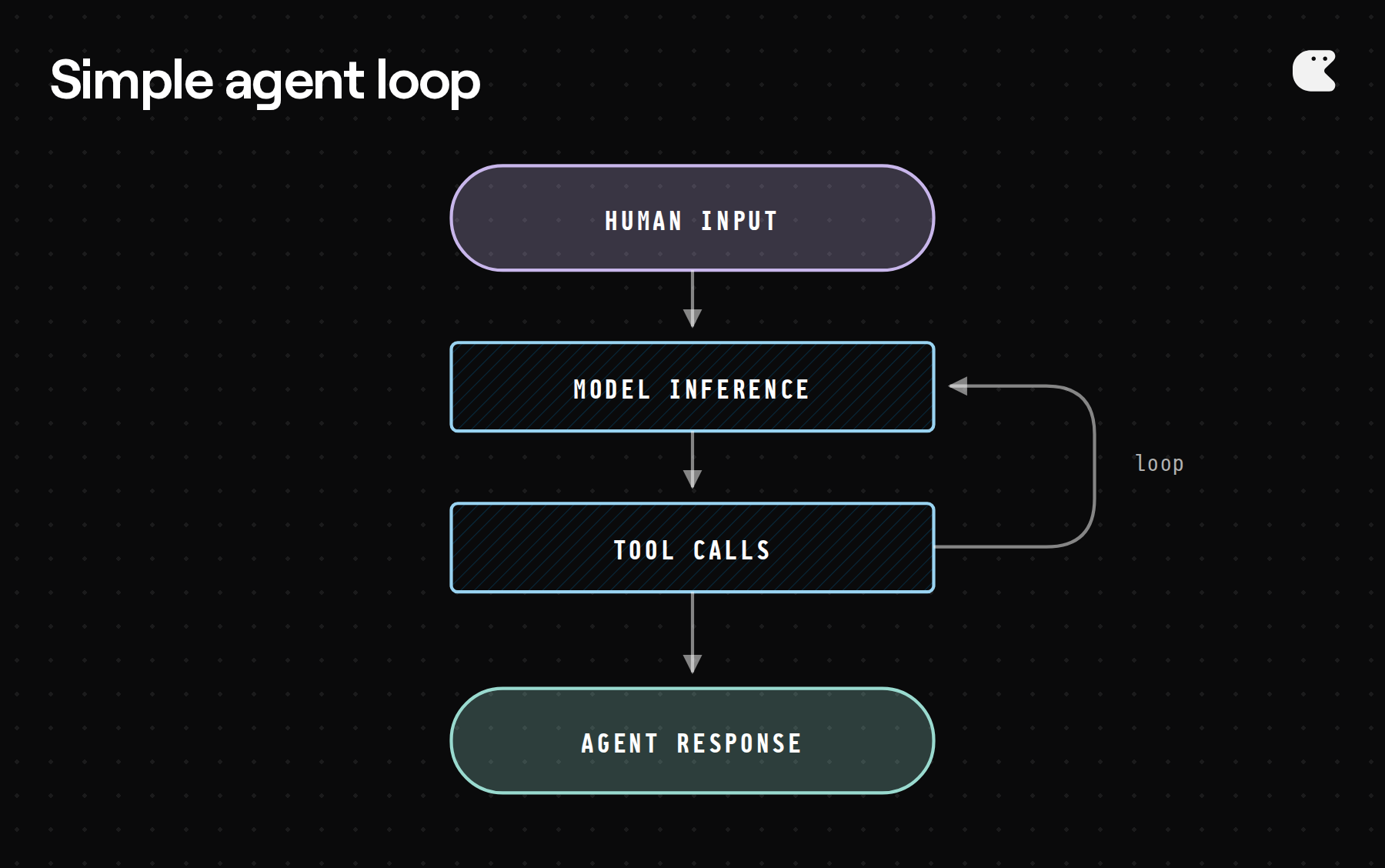
IDE-native assistants like Claude Code are great for interactive, in-editor work: drafting, refactors, quick iteration. But they're not optimized to serve as a team-facing execution environment.
- They don't naturally start from events like "PR is ready," "Sentry regression," "Linear mention"
- They don't inherently live in GitHub/Linear/Slack as first-class surfaces
- They typically rely on the developer to finish the loop (run checks, open PRs, summarize, coordinate)
OS-style agents are built for that missing layer: cross-tool orchestration + durable, reviewable artifacts.
What happens when Charlie gets to work
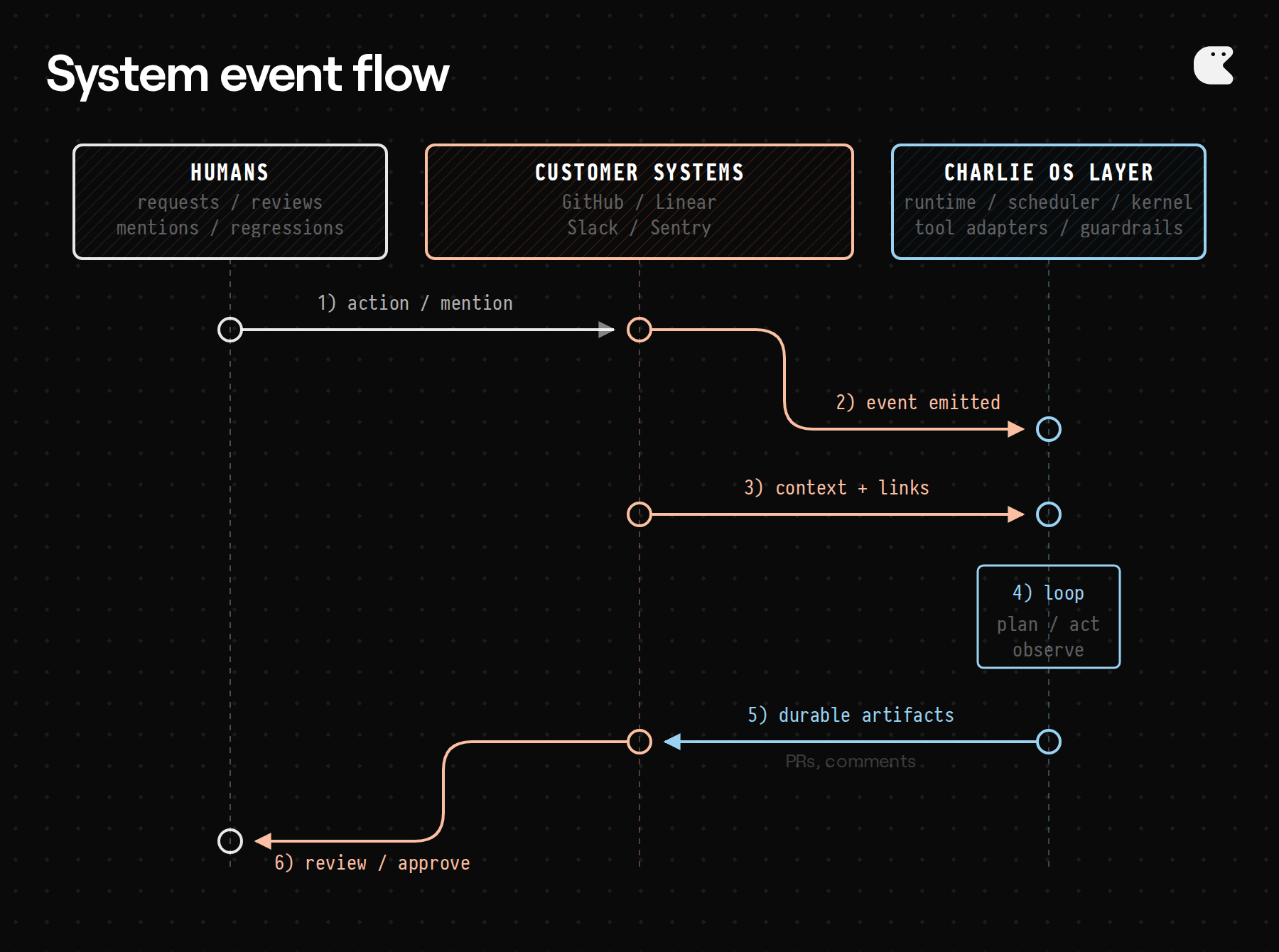
An interrupt happens
A mention, review request, regression, or scheduled trigger.
Charlie normalizes + enriches the signal
Into "this is the work request, with relevant context."
Routing + policy gates
Decide whether to act, what thread it belongs to, and which capabilities are allowed.
A durable Task is created (or appended-to)
And becomes runnable.
The executor claims the Task
Single-winner claiming, enters a durable, turn-based loop.
Each turn
Assemble context, decide + plan, call the LLM, dispatch tool calls, observe results + check mailbox/cancel + continue.
Publish durable artifacts
Back to the source system (PRs, reviews, issue updates, summaries).
Record terminal status + telemetry
Durable transcript/state remains; ephemeral compute is cleaned up.
What the Agent OS delivers
The agentic operating system delivers better outcomes:
- Higher completion rate on real tasks. Not boxed into narrow tools or rigid workflows.
- Higher quality output. Uses the same mechanisms strong engineers use: tests, CI logs, repo history, incremental iteration.
- Team-native collaboration. Reviewable artifacts in GitHub/Linear/Slack, not private chat transcripts.